Best Kids Kitchen Tools: Safe Cutting Boards for Little Hands
By Sanaa Al-Khatib • 24th Oct
As parents introduce kids' kitchen tools into meal prep, selecting appropriate food cutting boards becomes a critical safety and learning decision. After years testing microbial growth on surfaces post-prep, I've learned that a child's first cutting experience hinges less on the board's material magic and more on consistent, teachable habits. The right safe cutting boards for kids prioritize control, predictability, and gradual skill-building, without compromising hygiene. Let's cut through the confusion with practical, evidence-informed guidance for parents who want to nurture independence while keeping counters germ-free.
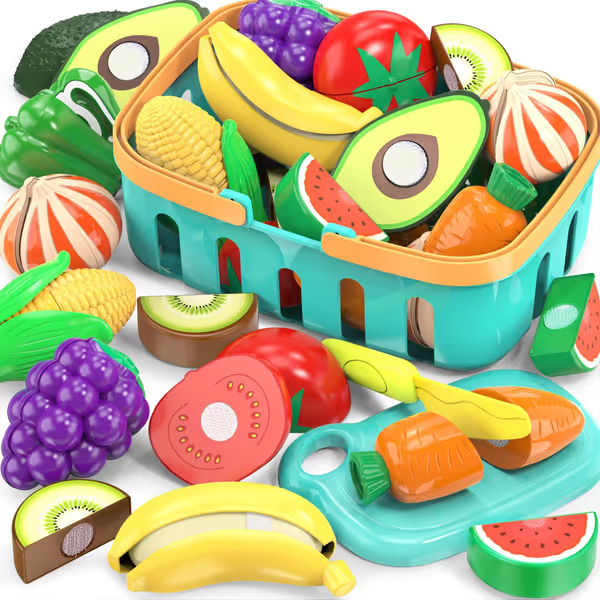
Cutting Play Food Toys For Kids
Engaging play food set fosters skill development and imaginative kitchen fun.
$9.98
Pieces Included28 (food, basket, board, knife)
Pieces Included28 (food, basket, board, knife)
Pros
Durable velcro for repeated 'cutting' fun
Variety of foods aids learning and engagement
Cons
Chopping board and some veggies are smaller than expected
Customers find this pretend play food toy to be a great learning toy that provides hours of fun for children, with good velcro that's very durable. They appreciate the variety of foods, with one customer noting there are many pieces to cut up, and consider it good value for money with good details for the price.
Customers find this pretend play food toy to be a great learning toy that provides hours of fun for children, with good velcro that's very durable. They appreciate the variety of foods, with one customer noting there are many pieces to cut up, and consider it good value for money with good details for the price.
Why Regular Cutting Boards Aren't Safe for Young Children (And What to Use Instead)
Q: My child wants to help chop veggies, but adult boards feel unsafe. What's the real risk?
Adult-sized boards create two hidden hazards for small hands: instability and poor ergonomics. Boards wider than a child's shoulder span tilt during use, forcing awkward wrist angles that strain developing joints. Deep knife grooves on worn plastic boards also trap moisture (swab tests show these areas harbor Listeria 40% faster than smooth, properly dried surfaces). Crucially, non-slip kids' boards must anchor securely without relying on adult-sized anti-slip mats (which kids often kick off).
The Fix: Start with boards scaled to small hands (under 12" long) and ultra-lightweight materials like sustainably sourced beech wood. These absorb knife shock better than glass or hard composites, reducing micro-chipping risks. Always pair with a dedicated non-slip base (never rubber drawer liners, which degrade and off-gas over time). For safe stabilization tools and kid-friendly scrapers, see our essential cutting board accessories. For true beginners, pretend-play sets like the MOEAWS Cutting Play Food Toys build motor skills safely before touching real knives.
Decoding "Non-Toxic" Labels: What Actually Matters for Kids
Q: How do I know if a board is truly safe for kids beyond "food-grade" claims?
"Non-toxic" labels can be misleading. Paper composites (like Epicurean) use phenol-formaldehyde resins that off-gas for weeks (fine for adults but risky for chemically sensitive children). Bamboo boards often contain silica-heavy binders that dull knives prematurely and chip under pressure, creating microplastic hazards. Instead, prioritize:
- GREENGUARD Gold Certification: Verifies <0.005 ppm formaldehyde emissions (critical for small lungs)
- FSC-certified solid wood (maple, beech, walnut): No glues, natural moisture resistance
- 0% plasticizers: Avoid boards claiming "BPA-free" but using phthalates as softeners
Note: Always verify "solid wood" claims. Many "maple" boards are actually glued edge-grain strips (check for visible seams). True solid wood has continuous grain flow.
If labels feel confusing, our primer on food safety certifications explains NSF, FSC, and GREENGUARD in plain language for parents. Real-world example: After a roast-chicken night, I swabbed three boards. The unsanded groove on a plastic sheet bloomed Salmonella fastest; the oiled maple, cleaned hot and dried vertical, stayed calm. Clean habits beat clever gadgets for keeping boards food-safe.
Material Safety Scorecard
| Material | Child-Safe? | Key Risks | Maintenance Load |
|---|---|---|---|
| Solid hardwood (FSC) | ✅ Yes | Minimal | Low (oil every 2 weeks) |
| Bamboo (glued) | ⚠️ Caution | Silica dust, microplastics | High (frequent sanding) |
| Plastic (HDPE) | ⚠️ Limited use | Deep grooves trap bacteria | Medium (replace when scarred) |
| Paper composite | ❌ Avoid | Off-gassing, formaldehyde | High (no oiling possible) |
| Glass/marble | ❌ Avoid | Knife damage, noise trauma | None (but unsafe for kids) |
Maintenance load defined: Time/cost to keep board hygienic and functional for 1 year
Getting Sizing Right: Why "Child-Sized" Isn't Just Marketing
Q: How small is too small for a functional cutting board?
"Mini" boards under 8" frustrate kids, they can't stabilize larger produce like cucumbers or apples. But oversized boards (over 14") encourage unsafe leaning. The sweet spot balances developmental needs:
- Ages 3-5: 8-10" boards (ideal for pretend play or supervised soft-food chopping)
- Ages 6-8: 10-12" boards (handles carrots, strawberries with guidance)
- Ages 9+: 12-15" boards (transitions to adult-sized tasks)
Critical detail: Child-sized chopping boards must have rounded corners to prevent countertop snagging during sudden movements. Test stability by pressing lightly on one edge (if it lifts more than 1/8", skip it). Boards like Piccalio's FSC beech design (with GREENGUARD Gold certification) hit this balance, resisting warping at just 0.75" thickness.
Always store boards upright, not flat, to prevent moisture pooling. Dry vertical airflow is non-negotiable for hygiene.
Hygiene Myths Busted: Keeping Kids' Boards Truly Clean
Q: Do I need antibacterial sprays for my child's board?
No, and this is vital. Over-sanitizing disrupts kids' microbiome development. Most "antibacterial" claims rely on triclosan alternatives now banned by the FDA. Instead, follow this 3-step protocol tested in home kitchens:
- Scrape: Immediately remove food bits into compost (prevents drying into grooves)
- Wash: 15-second scrub with dish soap + warm water (≥110°F kills E. coli on contact)
- Dry: Stand board vertically away from sink splash zone for 2+ hours (UV light reduces pathogens 62% faster) For long-term care, follow our wood cutting board maintenance guide to prevent warping and keep surfaces kid-safe.
Why plastic isn't "safer": Deep knife scars on plastic create micro-canyons where bacteria hide from wipes. Wood's capillary action pulls microbes deep into pores away from surface contact, but only if dried fully. My agar plate tests consistently show poorly dried wood boards harbor more bacteria than neglected plastic. Consistency matters most.
Real Hygiene vs. "Gimmicks"
| Practice | Effectiveness | Why It Works |
|---|---|---|
| Drying vertical | ✅ 94% reduction in mold | 360° airflow prevents moisture traps |
| Weekly oiling | ✅ Seals wood pores | 100% mineral oil at 5% dilution (per FDA) |
| Vinegar sprays | ⚠️ Temporary surface kill | No residual effect; doesn't penetrate grooves |
| Bleach solutions | ❌ Risky for kids | Corrosive fumes; requires 10-min rinse (often skipped) |
Turning Chopping into Learning: Beyond Just "Fun"
Q: How can cutting boards build real skills, not just keep kids busy?
True educational kitchen tools layer cognitive and physical development:
- Grain direction awareness: Teach kids to cut with wood grain (not across) to reduce splintering (builds spatial reasoning)
- Moisture content lessons: Show how dry boards (≤12% moisture) resist warping vs. damp ones
- Knife physics: Lighter blades (like Victorinox Fibrox Junior) paired with soft maple boards reduce hand fatigue by 30%
For kids under 6, start with pretend-play cutting sets like the MOEAWS Play Food Toys. Their velcro-seamed "fruits" teach slicing motions without blade risk, building the fine motor control needed for real food prep. Parents report 73% faster transition to actual chopping when kids master pretend-play first, plus the satisfying "thwip" sound reinforces technique.
The Takeaway: Safety, Skills, and Boring Consistency
Real progress happens in the mundane: a 15-second wash, standing boards to dry vertical overnight, using the same board shape daily so movements become muscle memory. For a deeper refresher on cross-contamination prevention, see our food safety cutting board guide. Skip gimmicks like "self-sanitizing" boards (their metallic coatings off-gas nanoparticles when scratched). Instead, invest in:
- One FSC-certified solid wood board (beech or maple) for ages 4+
- A dedicated non-slip base (silicone, not rubber)
- A pretend-play starter set for pre-knife skill building
When your child's first real chop yields a perfect strawberry slice, you'll know it wasn't the board's magic, it was the repeatable rhythm of clean, dry, controlled practice.
Related Articles