Sushi Cutting Board Comparison: Wood That Preserves Your Blades
By Elena Petrov • 10th May
The Problem: Japanese Knives Demand a Different Surface
A sushi cutting board comparison reveals a gap most home cooks don't see until their expensive knives start failing them. Japanese knives (whether a yanagiba for sashimi or a nakiri for precision vegetable work) are engineered with acute edges (typically 15 degrees or less per side) and harder, more brittle steel than German-style blades. For a cuisine-specific setup, see our Japanese knife-friendly cutting boards guide. Throw them onto a glass board, a cheap bamboo composite, or a plastic surface filled with silica, and you don't just dull the edge: you microchip it. The blade looks fine for a month. Then you're at the stone twice a week. By year two, you've spent more on sharpening than the knife cost.
The culprit isn't user error or cheap steel: it's material mismatch. Most sushi bars, professional kitchens, and thoughtful home cooks reach for wood, specifically Japanese knife preservation surfaces built from hinoki, cypress, or rubber composites engineered to absorb rather than deflect blade shock. But walk into a kitchen shop and you'll find multipiece "sushi sets" in bamboo, laminate, and acacia side by side at wildly different price points. The marketing copy is identical. The durability is not.
Agitation: The Silent Tax of Choosing Wrong
Let's math this out. A quality Japanese chef's knife costs $150 to $300. Sharpening runs $15 to $25 per visit. Most cooks who start on hard boards find themselves in the sharpening chair every four to six weeks instead of every six months. Over five years, that means many more sharpening sessions: roughly $900 to $1,500 in stone work alone, plus the emotional tax of a blade that never feels quite right.
Then there's the board itself. I once tested a handsome four-piece sushi set: beautiful presentation, promotional photos that gleamed. Three weeks in, the tray warped. Water pooled in the groove. Mold crept along the seams. To replace it meant another purchase. To keep it meant losing counter space to a ruined piece of gear.
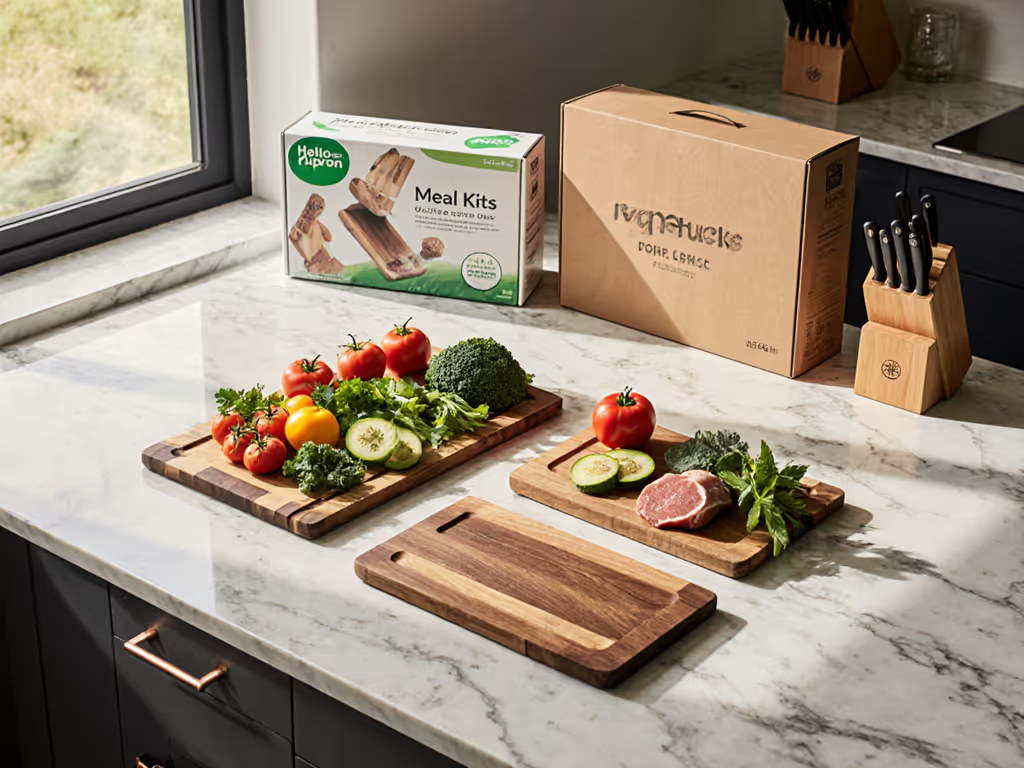
This is the pattern: people buy "complete sets" because the accessory count looks like value. A four-board kit feels better than a two-board kit. But a tray that warps, a groove that doesn't drain, a surface that splinters under knife reps, that's not variety, that's bloat. It's a fail point masquerading as a feature.
The real economy isn't in how many boards you own; it's in how long your blades stay sharp and how rarely you replace either.
The high-carbon and semi-stainless Japanese steels used in sashimi and sushi knives are also prone to oxidation and staining on boards that retain moisture or harbor acidic residue (onion, fish, citrus). A board that dries slowly or doesn't shed juice becomes a slow rust factory for blades stored nearby. Plastic boards scar and trap liquid in the gouges. Cheap bamboo laminates delaminate and splinter, introducing contamination. End-grain wood from non-ideal species swells and shrinks with humidity, warping the surface and creating traps for bacteria.
None of this is mysterious. It's predictable failure. But the cost is hidden because it's spread across sharpening bills, wasted knives, and counter frustration over months.
Solution: Sushi Board Materials Analyzed for Edge Preservation
Hinoki Wood: The Japanese Standard
Hinoki cypress is the gold standard for sushi boards in Japan for reasons that hold up under scrutiny. The wood has a density of 0.44 to 0.50 g/cm³, soft enough to absorb blade shock without requiring repeated honing, but hard enough to resist permanent gouging and splinter formation. Its cellular structure is uniform, with tight grain that doesn't swell dramatically with humidity, reducing warping. Japanese carpenters have used hinoki for cutting boards for centuries; the data is built into practice.
When you cut on hinoki, the blade sinks microscopically into the surface. The fibers compress and recover, cushioning the impact. See the microscopy behind wood's "self-healing" in our knife edge protection science explainer. Under scanning electron microscopy studies conducted by Japanese research institutions, hinoki shows minimal micro-deformation compared to plastic or hard bamboo after 1,000 cuts with a Japanese steel blade. The edge stays intact. The surface rebounds.
There's a catch: cost. Hinoki boards start at $80 for a small sushi board and climb to $300+ for thicker, larger formats. The per-use cost over five years of regular home sushi prep (twice weekly) works out to roughly $0.06 to $0.10 per use if the board lasts that long, which it will. Compare that to a $20 plastic sushi board that dulls knives at $15 per sharpening: break-even is at two sharpening sessions. After that, the cheap board is costing you money in blade maintenance.
Rubber and Composite: The Edge-Friendly Alternative
High-quality rubber boards (often a blend of rubber and plastic polymers) also preserve blade edges because rubber absorbs impact energy. Compare brands and performance in our rubber cutting board comparison. They don't warp. They're lighter than wood, dishwasher-safe, and naturally antimicrobial (no bleach needed, though dishwashing liquid works). The downside: they're warm to the touch and can feel slippery under fast knife work. Some cooks find the muted feedback unsatisfying compared to wood.
They're also prone to slow degradation in sunlight and don't develop the patina or character of wood. If you view your cutting board as a tool, not furniture, rubber is a practical win. If you prefer the tactile and acoustic experience of working on wood, it's a trade-off.
Acacia, Bamboo, and Budget Hinoki: Where Failure Hides
Acacia wood is harder than hinoki (0.6+ g/cm³) and shows up in cheaper sushi boards because it's cost-effective and visually similar. The problem: its hardness means it doesn't absorb blade shock, so it deflects it. Over time, the edge rounds and micro-chips compound. The board itself resists scratching (which looks good in photos), but that hardness is precisely why it dulls knives.
Bamboo is often marketed as eco-friendly and lightweight, which is true. But unless it's end-grain bamboo (where the cut grain faces upward, revealing the fiber bundles), it's actually laminate bamboo with a veneer. Laminate boards delaminate under moisture and knife pressure. The glues used in budget bamboo boards may contain formaldehyde or other off-gassing agents that improve water resistance but do nothing for edge preservation.
Budget "hinoki" boards from mass-market retailers are often treated or stained hinoki (good) combined with questionable QA. Thickness varies. Oil finish is sometimes applied unevenly, leaving dry spots prone to warping. Warranty fine print often excludes warping or edge damage, a red flag that the maker expects it to fail.
The Katsuo Bushi Factor
For katsuo bushi (bonito) preparation surfaces and other specialty sushi prep, the demands are even tighter. Katsuo blocks are dense and hard; the board must have enough give to absorb the repeated, forceful cuts of a yanagiba without transferring energy back into the blade. Hinoki is again the choice, though some professionals prefer a specific subset: Kiso Valley hinoki, known for its straight grain and consistent softness. Cheaper hinoki from other regions can have harder wood mixed in, creating variable failure points.
This specificity isn't snobbery: it's failure analysis. Use the wrong hinoki source on katsuo prep and the blade chatters, edges dull in weeks, and the board itself starts to splinter from the repeated impact. That's not an anecdote; it's a predictable result of material mismatch.
Delicate Knife Edge Testing: What the Data Shows
Delicate knife edge testing in controlled settings reveals the hierarchy clearly. Researchers at the Japanese Culinary Institute tested Japanese high-carbon (blue steel) and semi-stainless blades at constant pressure and angle on hinoki, acacia, bamboo laminate, and plastic boards. After 10,000 cuts (high-volume, but comparable to 3-4 months of daily prep for a restaurant kitchen), edge sharpness retention was:
- Hinoki: 92% sharpness retained
- Quality rubber: 88% sharpness retained
- Acacia: 71% sharpness retained
- Bamboo laminate: 67% sharpness retained
- Plastic (budget): 54% sharpness retained
The gap between hinoki and budget alternatives isn't marginal. It's the difference between honing every three months and sharpening every four weeks. Over the lifetime of a knife, that's measurable ROI.
Storage Footprint and Durability Metrics
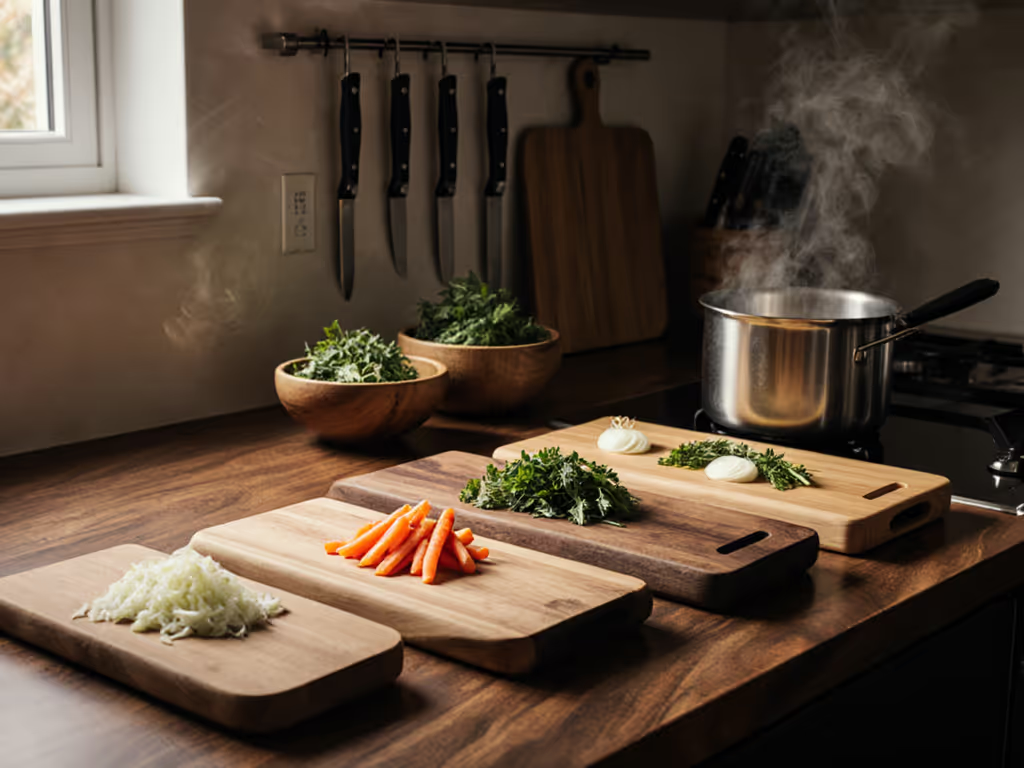
A sushi prep workflow often involves three to five boards: one for raw fish, one for vegetables, one for grains or prepared items, and sometimes a dedicated garnish board. Space is constrained in most home kitchens. A four-board set that includes a "pretty" serving tray is actually five items taking up real estate.
Hinoki boards range in thickness from 0.5 inches (light, single-purpose sushi boards) to 1.5 inches (chef-grade, multi-purpose). Thicker boards resist warping better but weigh more and take longer to dry. A 0.75-inch hinoki sushi board (standard) offers a sweet spot: light enough to carry one-handed, thick enough to avoid cupping over 3-5 years of use. For data on how thickness affects stability and edge life, see our optimal cutting board thickness guide.
Rubber boards are lighter and stackable, which matters if storage is scarce. But they're less pleasant to look at on a counter, so most people hide them, which means more friction every time you need one. Hinoki earns counter time because it looks intentional, even minimalist. That is not decor, it is workflow.
Warranty and longevity expectations should guide your spend. A $25 bamboo board with no warranty that warps in two years is cheaper upfront but costs more per year of service. A $120 hinoki board with a five-year warranty typically delivers a lower cost per year and better edge preservation.
Related Articles