Hotel-Grade Cutting Boards: What Home Kitchens Truly Need
By Noa Feld • 7th Dec
If you've ever wondered why restaurant prep feels smoother than your home kitchen chaos, the secret starts with food cutting boards that meet professional kitchen standards. Forget the glossy Instagram boards that slip across countertops or scar your knives after one onion. Real hospitality-grade surfaces prioritize grip, stability, and gentle feedback, because comfort builds confidence; confidence keeps edges where they belong. When your board thwacks instead of drags, your grip steadies, and your cuts stay precise. Let's cut through the hype and find what actually works for home cooks who deserve professional results without industrial headaches.
Why do restaurants swear by plastic cutting boards?
Commercial kitchens lean heavily on high-density polyethylene (HDPE) boards for three unbreakable reasons: hygiene, color-coding, and durability. These non-porous surfaces resist bacteria better than wood (which can harbor moisture in pores) and survive constant dishwasher cycles without warping. But here's what home cooks often miss: they're not just "plastic." The density matters. Standard polyethylene (PE) feels spongy and dulls knives faster; HDPE has just enough give to cushion blade edges while staying rigid enough for clean cuts. In high-volume food prep, this balance means knives stay sharper longer and hands stay quieter during marathon chopping sessions.
grip-first, safety is speed
That slight depression you feel when slicing through carrots? That's the board giving without collapsing, a tactile signal that your knife isn't fighting resistance. At home, you don't need NSF certification, but you do need that same responsive feedback. Look for boards labeled "HDPE" or "high-density" (not generic "polyethylene") to avoid the cheap, knife-killing varieties.
Do I need color-coded boards at home?
The rainbow system (blue for fish, green for produce, etc.) exists in commercial kitchen workflow to prevent cross-contamination during 100+ task handoffs. For a breakdown of brand color schemes and best practices, see our color-coded cutting board systems comparison. But your kitchen likely handles fewer transitions. Instead of buying seven boards, adopt a minimalist color code: one dark board for proteins (to spot juices), one light board for produce/bread. This gives visual separation without cluttering small counters.
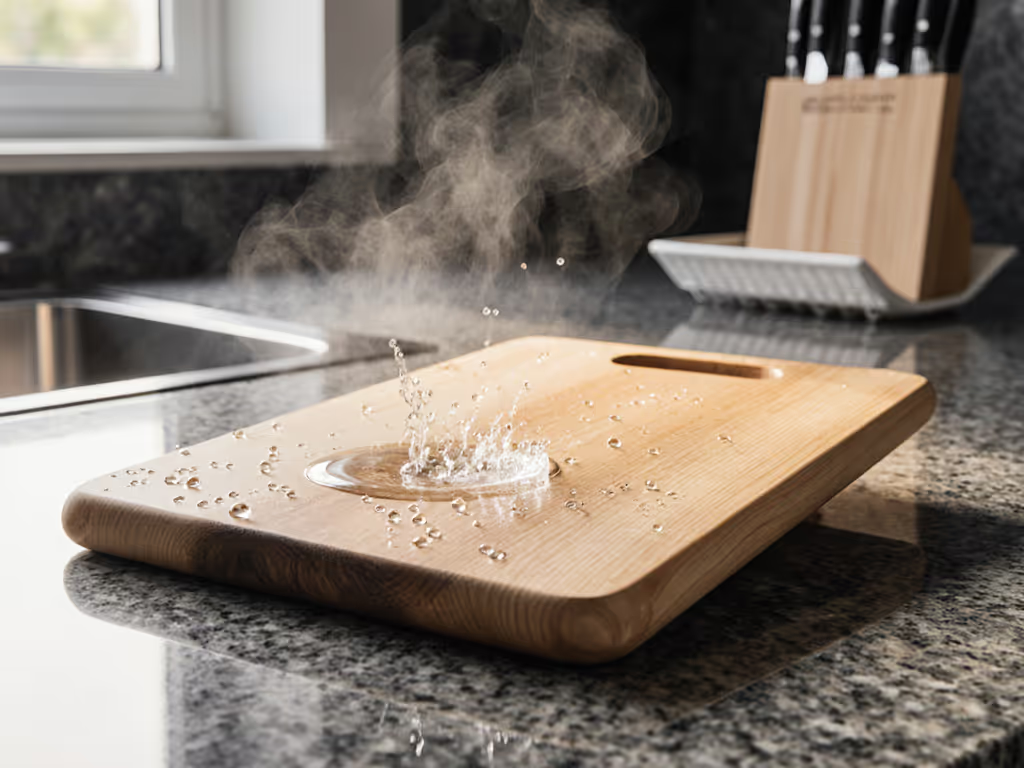
Key stability check: Press your palm flat on a wet board. If it skids, flip it. Most premium HDPE boards have textured surfaces or rubberized corners (like San Jamar's Saf-T-Grip design) that hug countertops even when slick with tomato juice. No more white-knuckled grips or frantic towel-under-the-board fixes.
How thick should my board be?
Commercial boards range from ½" (for rapid turnover stations) to 2" (for butchery blocks). Home cooks need the "Goldilocks zone": ¾" to 1¼". Thinner boards glide across counters when you chop near the edge; thicker ones become sink-unfriendly doorstops. That sweet spot offers stability without heft, you can lift it confidently to scrape scraps into bins without straining your wrists.
Won't plastic scar and smell over time?
It will, but strategically. Shallow scratches are harmless; deep grooves trap odors. The trick? Rotate your board 90° weekly so wear distributes evenly. For restaurant board maintenance at home: scrub with coarse salt + lemon after fish/onion sessions, then air-dry vertically. Never soak. HDPE boards that survive commercial dishwashers weekly handle home hand-washing with ease. If odors persist, a vinegar soak (1:1 water/vinegar, 30 minutes) resets the surface. For stain removal, deodorizing, and sanitizing protocols, follow our plastic cutting board care guide.
What about wood or bamboo boards?
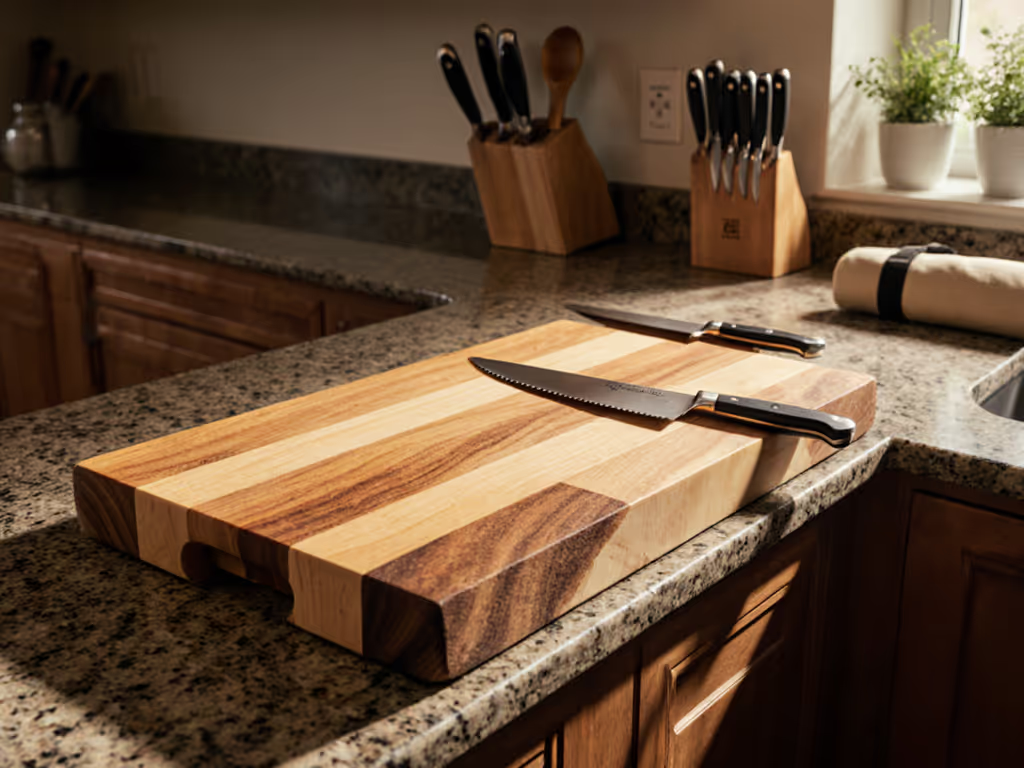
Wood's "self-healing" grain is chef catnip, but it's a liability in humidity swings. Most health codes ban wood in commercial raw-protein zones because moisture breeds bacteria in microscopic cracks. For home use, end-grain maple can work if you maintain it like a violin, oiling monthly with mineral (not olive) oil and never, ever soaking it. Bamboo? Skip it. Its silica content dulls Japanese steel faster than glass (yes, really).
Does board choice affect my knife's lifespan?
Absolutely. Hard surfaces (glass, bamboo, cheap plastic) create micro-chips on thin Japanese edges. Soft surfaces (rubber, thick wood) cause drag that bends tips on German steel. HDPE sits perfectly in the middle: compliant enough to absorb impact, firm enough to keep cuts clean. For a data-backed look at edge wear, read our plastic vs wood knife preservation tests. A chef I worked with switched from bamboo to HDPE and doubled her knife's sharpness lifespan, no sharpening needed between weekly meal preps.
How do I stop noise from bothering my household?
That thwack isn't just annoying, it's fatiguing. Commercial kitchens often place boards on damp towels to mute impact. At home, try this: lay a silicone mat under your board, or dampen a thin cotton towel beneath it (wring it until just moist). The slight give softens the chop while anchoring the board. Better yet, choose boards with built-in sound-dampening cores (some newer models sandwich rubber layers between HDPE sheets) for silent slicing. Curious why some boards are quieter? Explore the cutting board noise reduction science.
What's the one upgrade every home cook needs?
A juice groove board. Restaurants use them for roasts and citrus, but home cooks forget how much liquid escapes even from cucumbers or melons. A ¼" perimeter channel catches runoff before it floods your counter, keeping your workspace dry and stable. Pair it with a companion scrap tray (a small rimmed tray placed at the board's edge) to toss onion skins directly into compost, no more frantic hand-wiping mid-chop.
Can I adapt pro techniques without pro space?
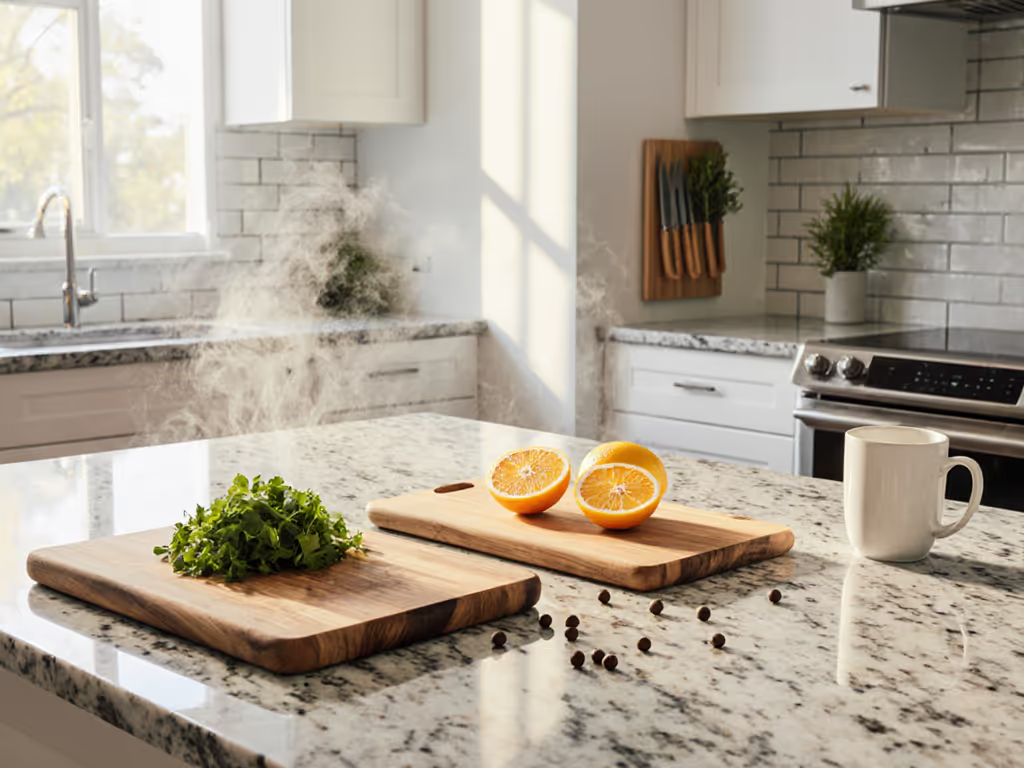
Yes, by prioritizing modular setups. Forget giant 24" boards that dominate cramped counters. Instead, keep one 18"x12" HDPE board as your "command center," plus two 8"x6" boards for staging (one for proteins, one for produce). Nest them during prep, then stack for storage. When I taught a neighbor who flinched at every chop, swapping her glass board for a rubber-matted HDPE surface and adding a scrap tray transformed her anxiety into calm precision. A week later, she sliced heirloom tomatoes without fear, or edge skids.
Final Thoughts: Your Quiet Kitchen Starts Here
Hotel-grade doesn't mean "restaurant replica." It means borrowing only what serves your home reality: stable surfaces that stay put, materials that protect your knives, and systems that simplify (not complicate) your flow. Forget luxury kitchen tools that look good but slide like ice. Invest in what you feel: a board that grips, gives just enough, and stays quiet under your hands. When your setup feels solid, your cuts do too.
Ready to test the difference? Skip the "best of" lists and visit a restaurant supply store (yes, they serve home cooks!). Press, drag, and tap boards to feel their give. Notice how they grip your palm. That tangible feedback beats any spec sheet. Your knives, and your confidence, will thank you.
Related Articles