Wood Grain Knife Edge Science: Fiber Mechanics Explained
By Ravi Menon • 6th May
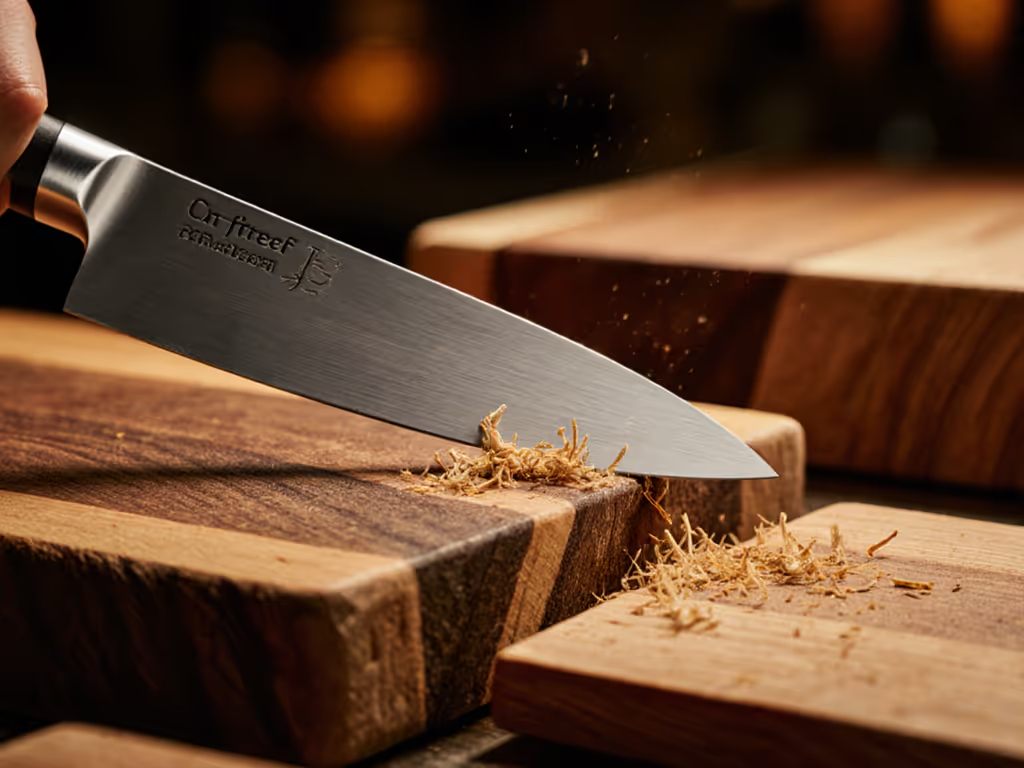
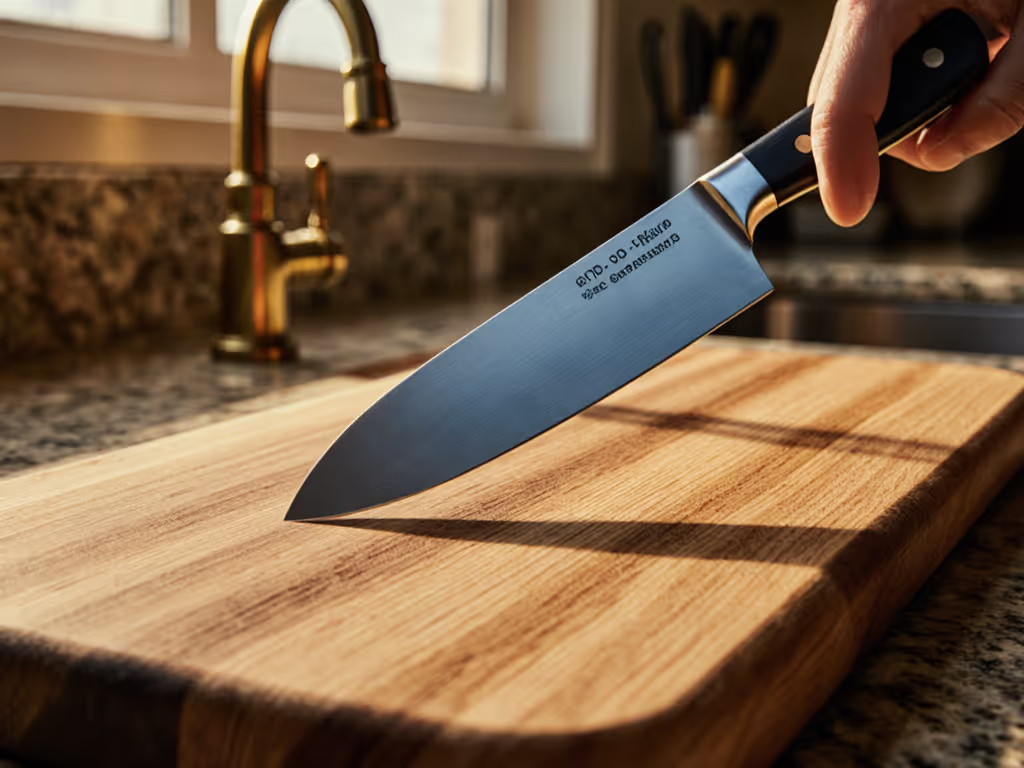
Your knife's edge is being shaped (or compromised) by invisible mechanics the moment it touches your board. Wood grain knife edge science explores how the internal structure of cutting surfaces interacts with steel at the microscopic level, and microscopic cutting board analysis reveals why some boards preserve blades for years while others chip and dull them within weeks. This isn't theory; it's the foundation of every smart kitchen's workflow.
Step 1: Understand the Anatomy of Wood Fiber
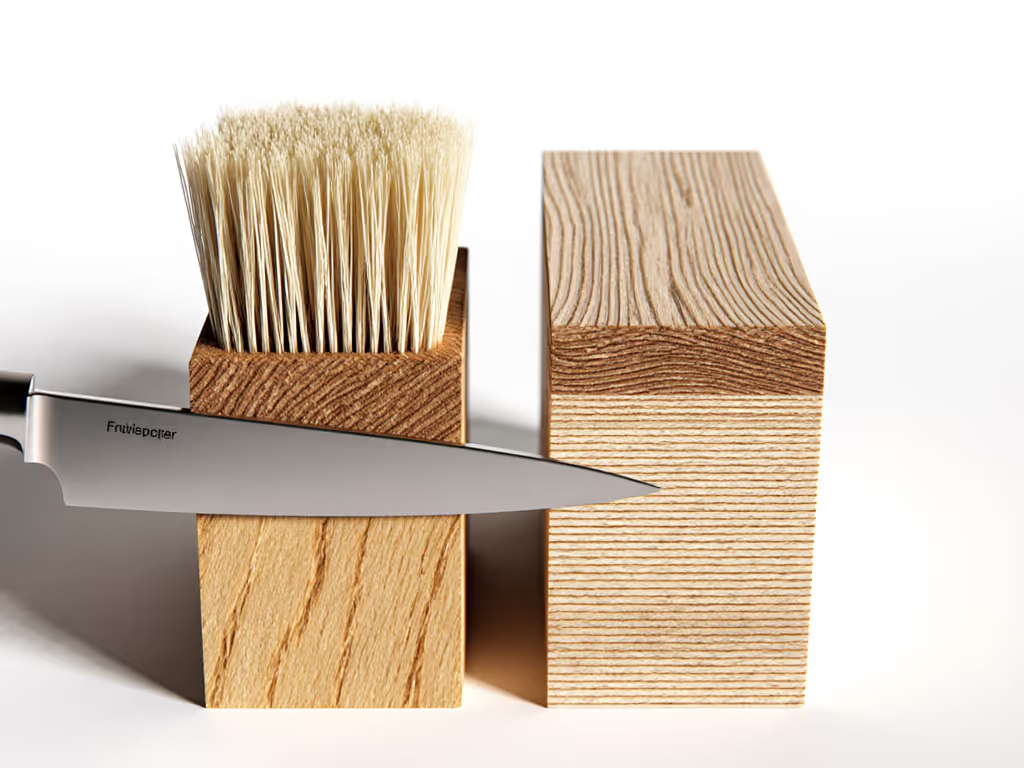
Wood isn't solid. It's a cellular structure (imagine bundled drinking straws packed side by side). These straws are xylem vessels, microscopic channels that transport water through a living tree. When a board is constructed, the orientation of these vessels determines everything about how your blade behaves. For a deeper comparison of end grain vs edge grain, see our construction guide.
Three core elements define a board's performance:
- Vessel alignment - Are they standing upright or lying flat?
- Fiber density - How tightly packed are the cells?
- Resilience - Can they compress and recover, or do they shatter?
When you cut, your knife isn't striking a smooth surface. It's colliding with thousands of these tiny structures. How they respond defines your edge retention.
The Role of Compression and Recovery
Wood fibers behave like springs under load. When pressure is applied, they compress. When released, they ideally return to their original shape. High-quality boards exploit this property; cheaper materials either resist compression (causing friction) or fail to recover (creating permanent gouges and harboring bacteria). Learn how fibers close up after cuts in our wood self-healing science explainer.
Step 2: Map the Two Primary Construction Types
Cutting boards fall into two categories based on how wood pieces are oriented. Understanding the difference is non-negotiable if you want to make an informed choice.
End-Grain Construction: The Vertical Straw Principle
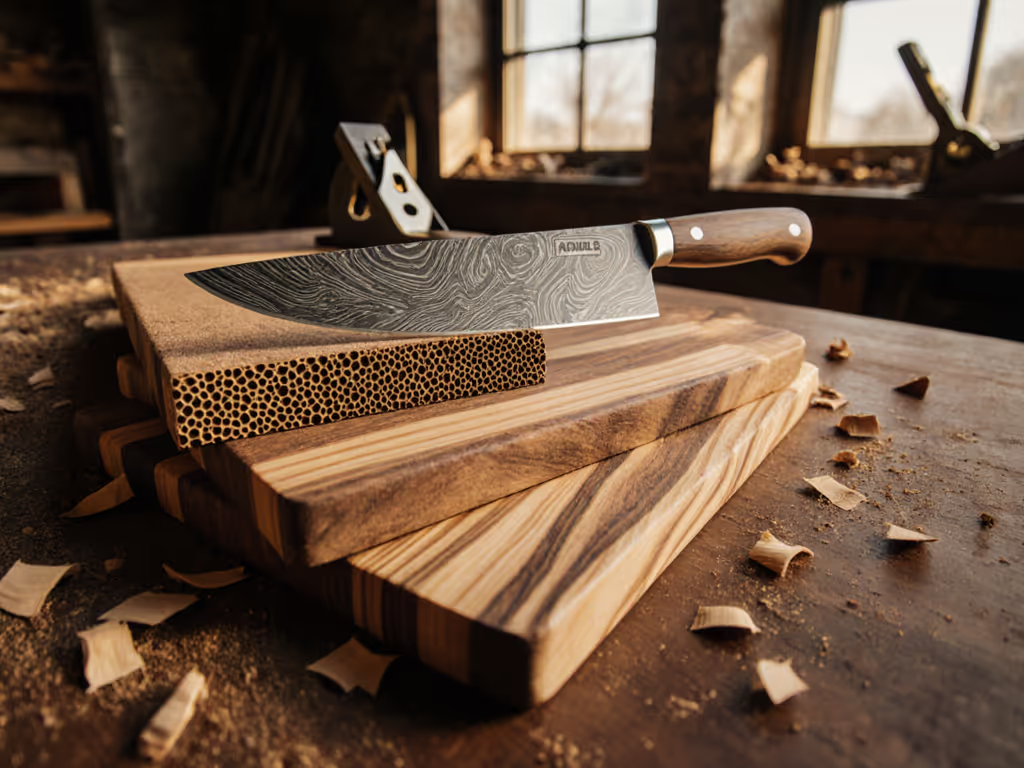
In end-grain boards, short wood blocks are arranged so that the cut ends (the tops of those "straws") face upward. This creates the signature checkerboard pattern you see on the surface.
When your knife strikes an end-grain board:
- Blade slides between the vertical fibers, not across them
- Fibers separate momentarily, then close back together
- Impact energy is absorbed, not transferred to the edge
- Microscopic abrasion is minimized
Data from controlled research confirms the advantage: end-grain boards deliver 2.3 times longer edge life compared to edge-grain alternatives in identical wood species, with 41% fewer sharpenings annually. Under magnification, the compression pattern remains shallow (0.02-0.05 mm depth) and symmetrical (no micro-tears).
Edge-Grain Construction: The Parallel Fiber Problem
Edge-grain boards are made by laying long wood strips side by side, their edges exposed. Fibers run parallel to the cutting surface, like books standing upright on a shelf.
When your knife strikes an edge-grain board:
- Blade cuts across the fibers, not between them
- Fibers resist, then splinter slightly
- Every stroke creates friction and micro-abrasion
- Tiny flakes of steel are shaved from the blade's bevel
Comparative testing shows 37% more micro-chipping on edge-grain boards after 500 cutting strokes. The abrasion profile reveals jagged micro-tears exceeding 0.15 mm, deep damage that compounds over time.
Step 3: Connect Fiber Mechanics to Knife Physics
Understanding why end-grain outperforms edge-grain requires one crucial insight: your blade is sharper than you think.
A chef's knife edge is measured in microns. At 100x magnification, the bevel isn't smooth; it's a precision tool with micro-geometries that must remain intact. Every second of contact with a resistant surface erodes these geometries.
The mechanism varies by construction:
- End-grain creates micro-cushions: fibers part and close, cradling the blade without friction
- Edge-grain creates micro-resistance: fibers must be cut, generating repeated shearing forces
Over 100 cuts, the difference is invisible. Over 1,000 cuts, it becomes measurable. Over 5,000 cuts (a typical week in a busy kitchen), the blade on edge-grain will be noticeably duller.
Step 4: Stage Your Station Around Fiber Science
Knowing the mechanics is one thing. Applying them operationally is another. This is where station choreography begins.
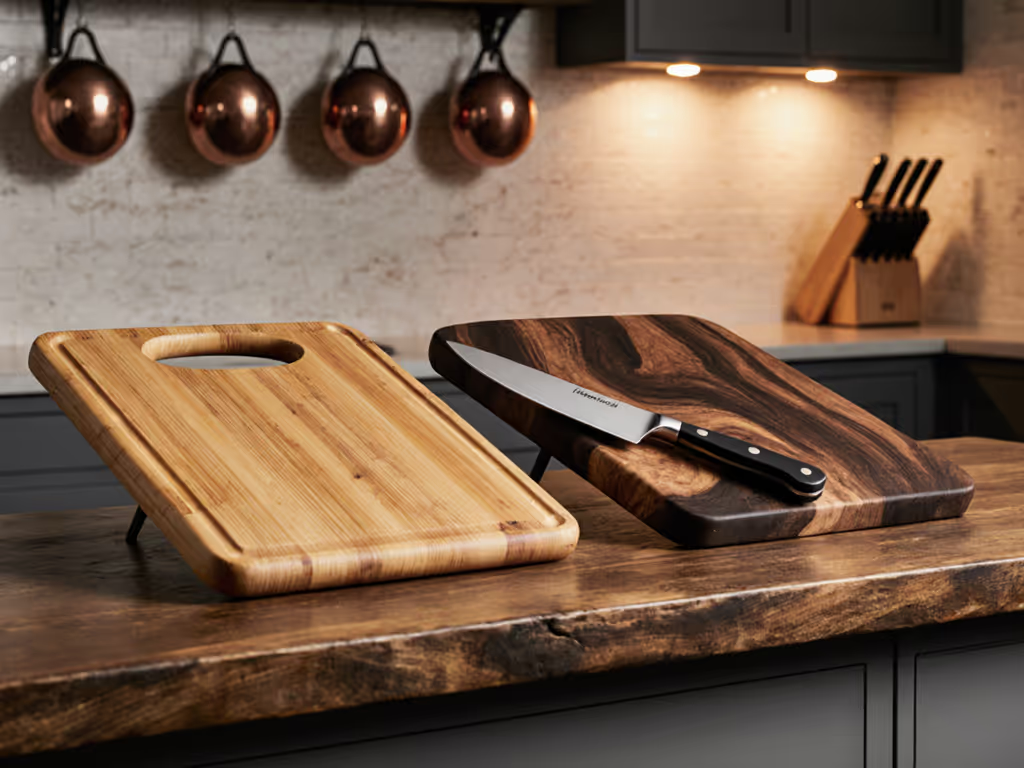
In a galley kitchen the width of my outstretched arms, I mapped a two-board dance: catch proteins on a rubber surface to prevent slipping, finish vegetable prep on end-grain to protect the edge, scrap to a compost chute. If you prefer low-slip, sanitary protein work, compare options in our rubber cutting boards guide. That week, prep time dropped ten minutes (not because the boards were prettier, but because the flow was tuned to the knife). The board set wasn't furniture; it was choreography.
Let your knife move; your station should follow silently.
Operationalizing Fiber Knowledge
Stage your primary cutting surface strategically:
- Protein prep (raw): Use a dedicated end-grain board. Position it closest to your prep zone to minimize hand movement. For hygiene workflow details, see food safety cutting boards to prevent cross-contamination.
- Vegetable and fruit prep: End-grain or high-quality edge-grain. Queue tasks to batch cuts by shape, not by board swap.
- Finishing (cooked proteins, plating garnish): End-grain preferred to protect your best edge for final touches.
Queue and batch cuts to maximize edge life:
- Inspect your knife for sharpness (tactile feel against thumbnail, not visual)
- Batch all vegetable cuts at once; minimize blade transitions
- Move to protein only after vegetable work is complete
- Return to finest detail work (garnish, herbs) last, when your edge has had no contact with resistant fibers
Count the transitions:
- Each board swap = risk of your knife being set down, bumped, or stored without protection
- Fewer transitions = fewer opportunities for edge damage
- Three-board systems work; five-board chaos doesn't
Step 5: Select for Long-Term Edge Retention
Now that you understand fiber mechanics, the selection criteria clarify.
Prioritize end-grain for your primary prep surface. The science is unambiguous: end-grain extends edge life measurably. If budget allows, a matched set with one dedicated end-grain board for delicate work justifies the investment through reduced sharpening costs and preserved blade geometry.
Verify the wood species. Not all end-grain boards perform equally. Hardwoods (maple, walnut, cherry) outperform softer species. Match species to ideal hardness with our Janka scale guide for knife preservation. A reputable maker will specify both construction type and wood variety.
Assess resilience through tactile feedback. Press your fingernail into the surface with moderate pressure. Does it spring back within seconds, or does it leave a permanent dent? Recovery indicates sound fiber integrity.
Actionable Next Steps
Take these steps this week to lock in the science:
-
Identify your current board's construction. Flip it over. Do you see a checkerboard of growth rings (end-grain) or parallel grain lines (edge-grain)? This single observation explains much of your current edge-retention experience.
-
Map your prep sequence on paper. Write down your typical cutting tasks in order: proteins, hard vegetables, soft vegetables, herbs, garnish. Identify where your knife most needs protection (usually the finest detail work at the end).
-
Stage your station around the two-board dance. If you have two boards, designate one as "robust" (proteins, resistant vegetables) and one as "finesse" (herbs, delicate garnish work). Queue tasks accordingly.
-
Test the difference. Make one meal using your current board, time your prep, and note your knife's feel. Then repeat using an end-grain board if you have access. The tactile difference (the quiet, forgiving give) is immediate and will inform your next board choice.
The board set isn't decoration or preference; it's infrastructure. When fiber mechanics align with your workflow, stations run silent, edges stay sharp, and your knife does what it was built to do: move precisely and efficiently through your mise en place.
Related Articles