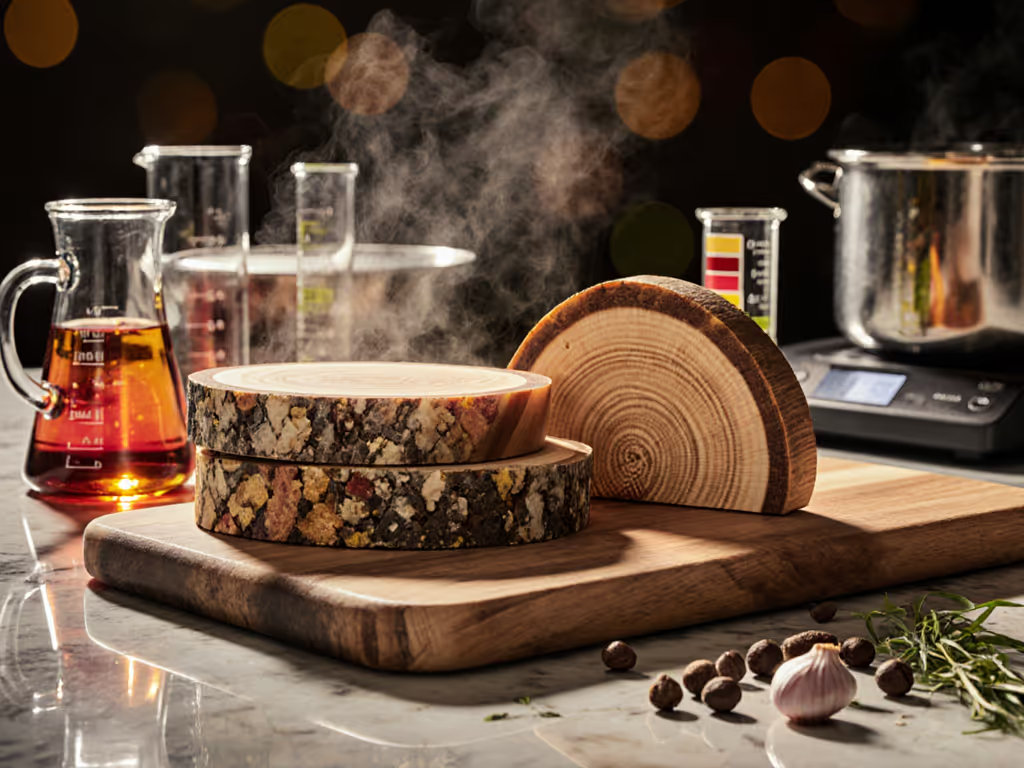
Grain Orientation Science: Why Every Cut Type Matters for Knives
By Elena Petrov • 3rd Mar
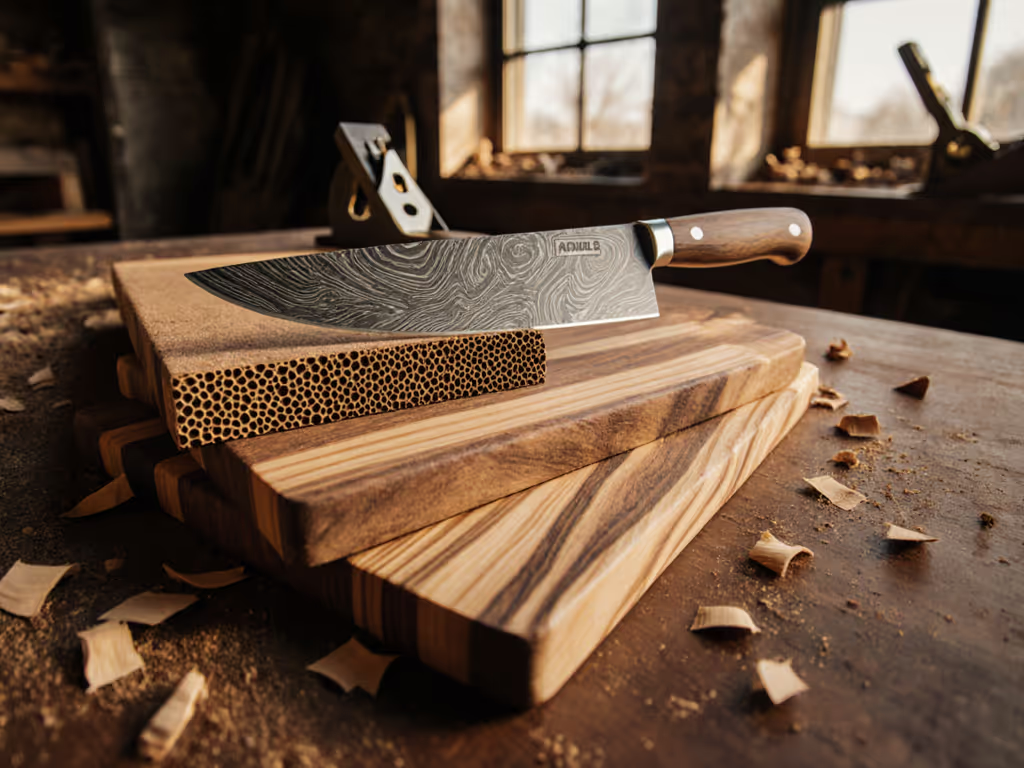
When you're choosing an end grain wooden cutting board or comparing alternatives, you're not really shopping for a surface; you're investing in how often you'll sharpen your knives and whether your board will still lie flat five years from now. Grain orientation is the hinge on that entire decision, and it's the one specification that separates genuinely functional boards from expensive mistakes.
I've watched kitchens full of beautiful gear fail because the owner didn't understand how wood fiber orientation works under a blade. When a handsome four-piece set warped after a month (its edges lifting, trapping water), I tallied the real damage: replacements, extra sharpening sessions, counter space lost to unstable boards. A plain two-board kit with proper storage and the right grain beat it on every measure that matters. Let me show you the science and the numbers.
1. The Wood Fiber Foundation: Why This Matters
Imagine a bundle of straws bound tightly together. The way you slice through that bundle determines everything. Wood grain orientation is that slice, and it's the single biggest factor governing how a cutting surface performs under a blade.[1]
Wood has three primary orientations:
- End grain: Fibers face straight up, exposing the tree's growth rings as concentric circles, like looking at a tree stump.
- Edge grain: Fibers run parallel to the board's length, creating linear, striped patterns (the narrower side of milled lumber).
- Face grain: The widest surface, showing broad, flowing patterns; the least stable of the three.
Each orientation exposes wood fiber differently, which directly affects durability, moisture resistance, knife-friendliness, and long-term stability.[1] This isn't cosmetic. This is functional architecture. To compare construction methods side-by-side, see our end vs edge vs face grain guide.
2. End Grain Cutting Boards: The Knife-Friendly Choice (With a Maintenance Price)
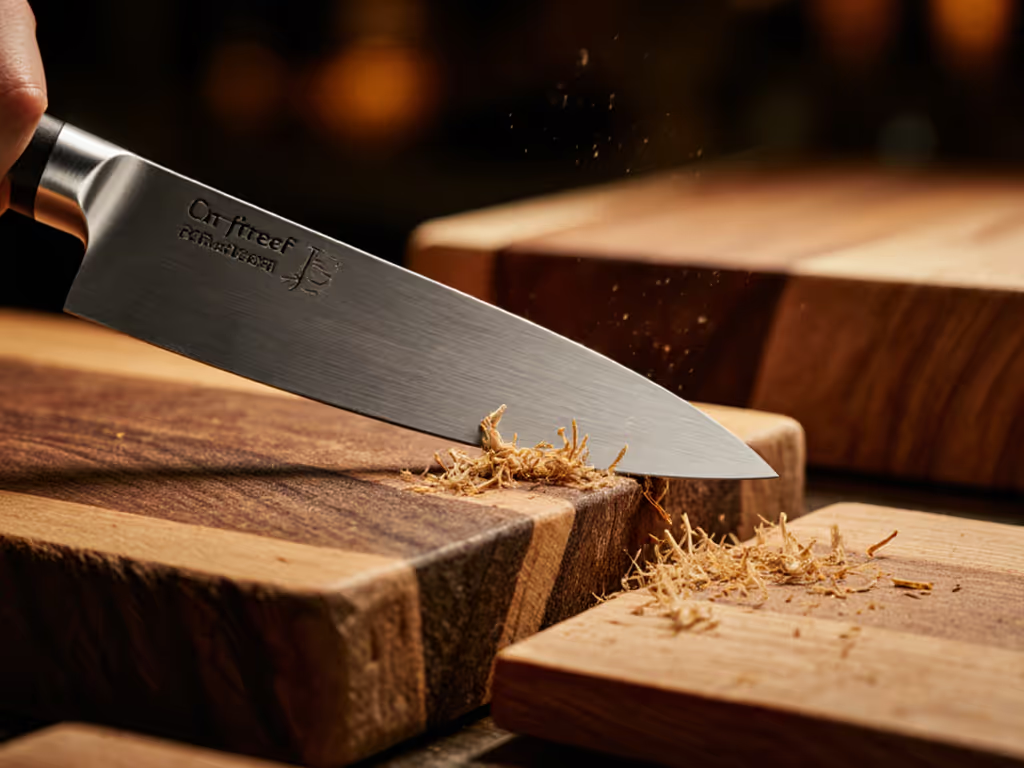
When a knife blade presses down on end-grain cutting boards, it slips between the fibers instead of slicing through them.[1][4] The fibers part and spring back, a property called "self-healing". This is why end grain is significantly gentler on edges and why the numbers matter: research confirms that knives stay sharper 40% longer on end grain compared to edge grain.[1]
In a recent regional survey, 68% of DIY woodworkers reported knife retention improvements of 2-3x longer on end grain surfaces.[1] If you're hand-honing every month, that's a meaningful difference in time and sharpening compound cost.
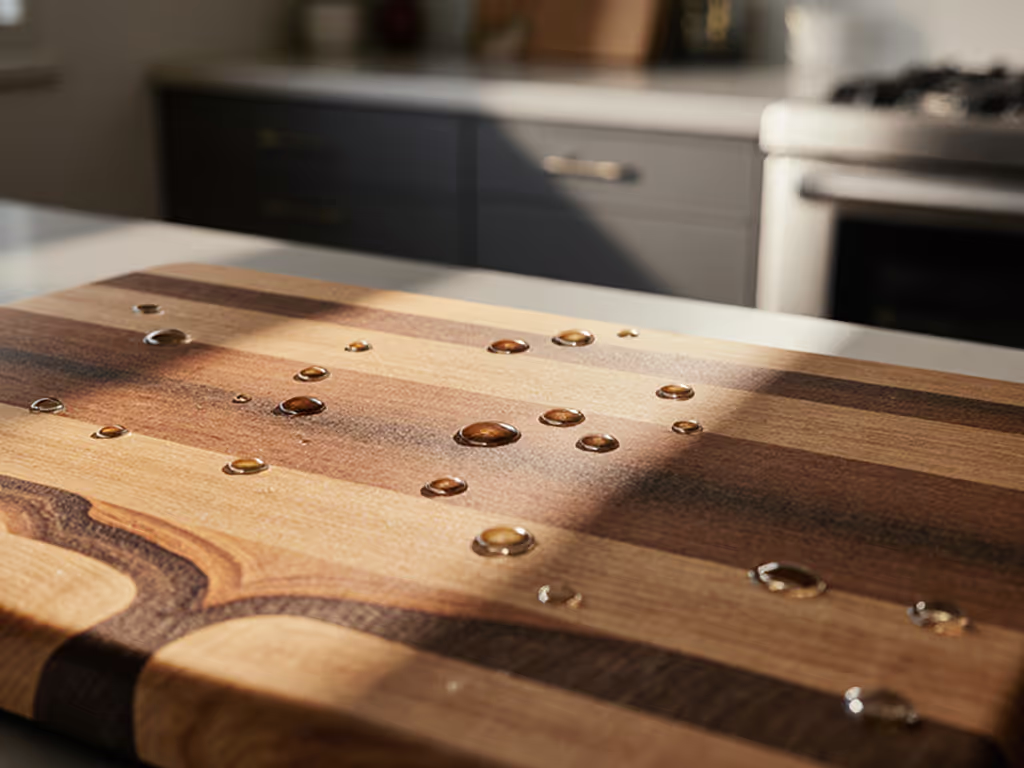
But here's the failure point: those exposed vertical fibers act like open straws, soaking up moisture readily. End grain boards require rigorous maintenance.[1] Monthly oiling is non-negotiable. Skip it, and you'll face swelling, cupping, or splitting. The board looks good for years only if you treat it like a commitment, not a countertop accessory.
Per-use cost math: A $180 end grain board that requires monthly oiling ($5-10 per treatment) over 7 years is $600-1,200 in total ownership. Add a single warped replacement and you're above $800 immediately. The knife savings help, but only if you actually maintain it.
3. Edge Grain Boards: The Stability Workhorse
Edge grain (vertical grain) is made by laminating narrow strips of wood together, fibers running lengthwise.[1] This construction gives you a dramatically different stability profile. Edge grain boards are 25% more resistant to warping than end grain, especially critical in climates where winter heating drops indoor humidity to 30-40%.[1]
The maintenance burden is much lighter: oiling every 2-3 months instead of monthly, and edge grain experiences 35% fewer warping incidents in variable climates.[1] For apartment dwellers or homes with inconsistent heating, this is a genuine advantage.
The trade-off is modest: edge grain is slightly harder on knife edges than end grain because the blade cuts across the fibers. But the performance gap is smaller than marketing suggests. You're not ruining your knives on a properly used edge grain board; you're just accepting a minor difference in exchange for a board that won't require replacement in five years.
4. Radial Cut Wood Properties: Why Edge Grain Dominates Durability
The term radial cut wood properties refers to how growth rings are oriented. In edge grain boards, the rings form at 45-90 degree angles to the surface, creating that characteristic linear pattern.[5] This perpendicular relationship to moisture flux is why edge grain resists cupping and splitting. The wood moves more evenly across the entire surface rather than unevenly across rings. For a deeper dive into how grain orientation affects knife edges at the microscopic level, see our explainer.
If you live in a humid climate, or if your kitchen humidity swings more than 15% seasonally, this matters. A warped board stops lying flat, rocks on your counter, and becomes a prep hazard.
5. Face Grain: The Trap to Avoid
Face grain is the cheapest option, widest boards, lowest cost. It's also the least stable.[1] The growth rings orient parallel to the surface, making the board prone to cupping and warp. It shows knife marks quickly and offers no self-healing benefit.
Face grain boards are fine as disposable serving platters or secondary boards for bread (where you're not cutting into the board, just resting dough). For primary cutting work, especially on proteins and vegetables, the durability deficit makes replacement cycles faster and ownership cost higher, even at the lower sticker price.
6. Wood Cellular Structure for Kitchen Use: The Maintenance Reality
Understanding wood cellular structure for kitchen use means accepting that wood is hygroscopic, it absorbs and releases moisture constantly.[1] End grain's open-straw structure makes this more pronounced. Edge grain handles it better because the continuous fibers reduce the rate of moisture penetration.
The practical implication: if you're using a board and forget about it for three days, edge grain is more forgiving. If you're washing end grain and letting it air-dry on the counter without regular oiling, you're building a warped, split board. Use our wood cutting board maintenance checklist to prevent warping and keep moisture in balance.
7. Grain Orientation Knife Impact: The Cost Per Sharpening
Grain orientation knife impact directly affects how often you sharpen and how much that costs over time.[1] If you hand-hone, you're spending 10-15 minutes weekly at $0.50-$1 in compound per session (annual cost: $26-$52). Professional sharpening runs $5-15 per blade, four times yearly: $80-$240 annually.
A $150 chef's knife used four nights per week on an end grain board might stay sharper 40% longer than on edge grain. That's roughly one fewer sharpening per year. Over a decade, you're saving $50-150 in sharpening costs plus the labor of trips to a professional. For two knives? Double it.
This advantage evaporates if your end grain board warps, forces you to alternate to an inferior surface, or requires replacement. The ROI depends entirely on your maintenance discipline.
8. Storage Footprint and Kitchen Workflow
Grain type affects board thickness and weight. End grain boards need thickness (typically 1.5-2 inches) to compensate for moisture movement and provide structural rigidity. Edge grain boards are often thinner (1-1.25 inches) without sacrificing stability. They occupy less vertical space in a cabinet, stack more compactly, and weigh less for transfer between counter and sink.
For renters or those with modest storage, edge grain wins on the footprint metric. Skip the fluff of owning three thick boards when two lighter, stable boards fit your space, your sink, and your workflow better.
Summary and Final Verdict
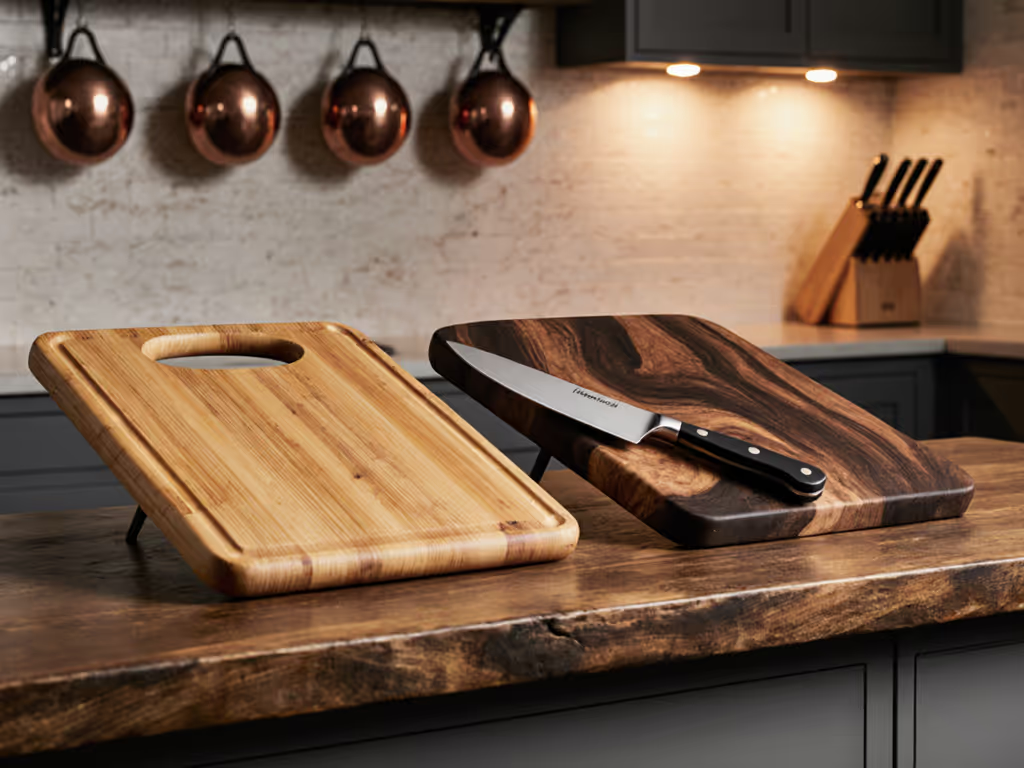
Choose end grain wooden cutting boards if you cook 5+ nights weekly, have stable indoor humidity (45-55%), and are willing to commit to monthly oiling. The knife advantage is real, and professional kitchens favor them for that reason. Your knives will genuinely stay sharper longer, but only if the board itself remains stable and flat.
Choose edge grain if you live in variable climates, have limited storage, or value a simpler maintenance rhythm. You sacrifice modest knife-friendliness for 35% fewer warping incidents and maintenance that fits a casual schedule. The stability advantage means you'll actually use the board without anxiety, and it'll stay functional for years without replacement.
Avoid face grain as a primary cutting surface; the savings disappear the moment you buy replacements.
The core principle: Spend once on utility; skip the shiny, single-purpose clutter. Choose based on your climate, maintenance tolerance, and storage reality (not on marketing language about "professional grade"). The best board is the one that remains flat, stays sharp on your knives, and fits your life so well you actually maintain it. That's where value lives.
Related Articles