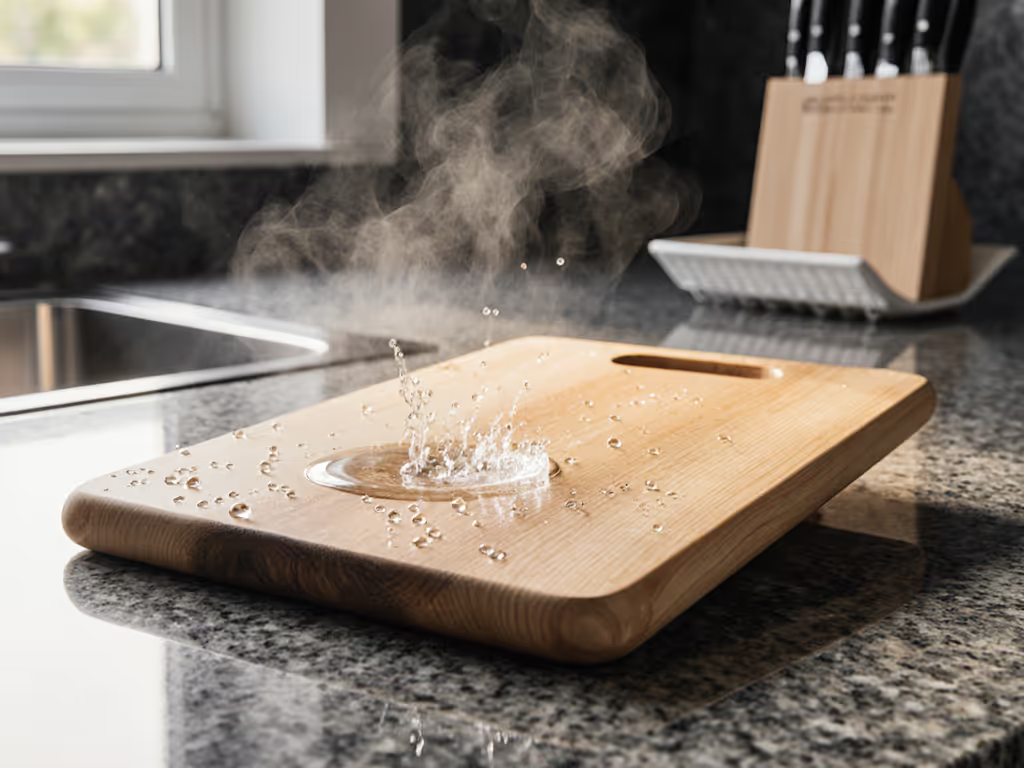
Food Cutting Boards For Pastry Chefs: Marble, Wood, Silicone
By Elena Petrov • 29th May
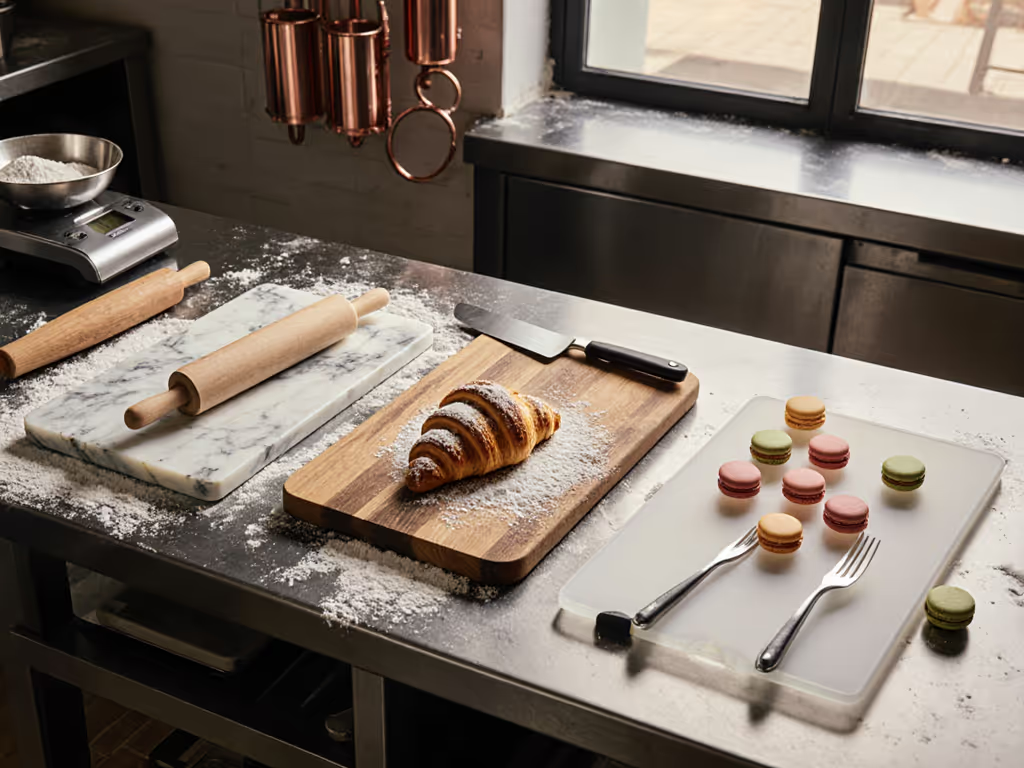
If you bake seriously at home, food cutting boards double as your lamination station, dough slab, chocolate tempering surface, and sometimes your everyday prep bench. This is where most "baking board recommendations" go sideways: they treat pastry as a photo shoot, not as stress testing for real dough, real knives, and limited counter space.
You do not need a museum slab. You need a surface that protects your edges, stays flat, manages temperature and stickiness, and doesn't swallow half your kitchen.
Spend once on utility; skip the shiny, single-purpose clutter.
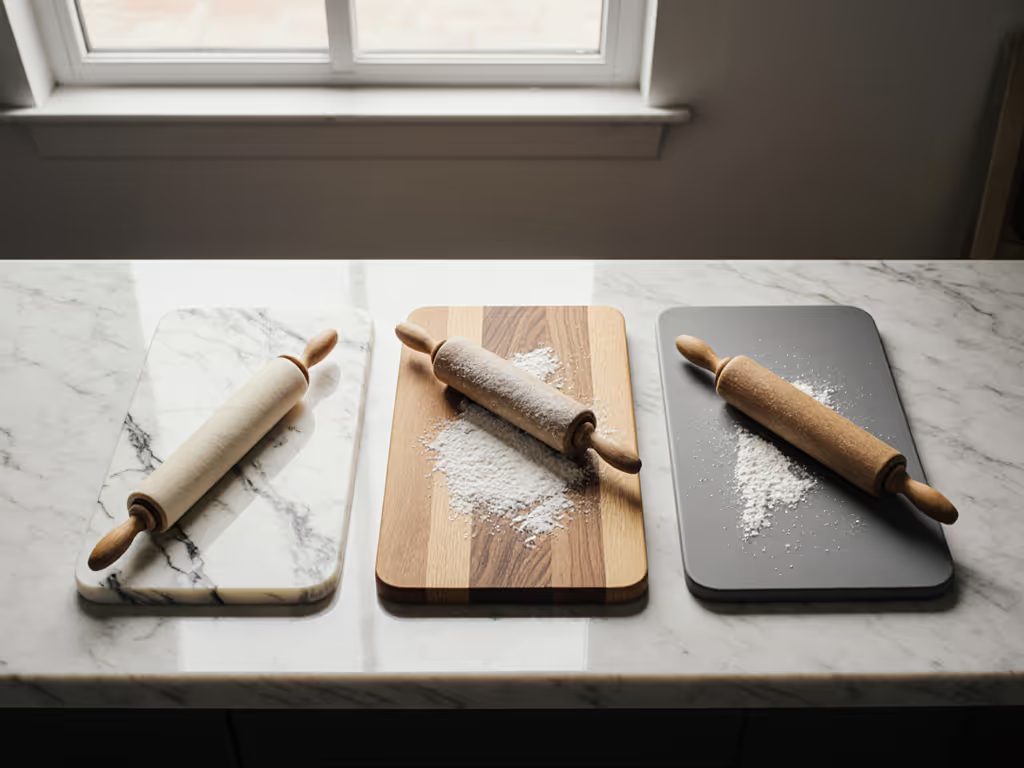
In this comparative analysis, I'll walk through marble, wood, and silicone as pastry boards using a TCO lens (total cost of ownership), not just sticker price. For a pastry-specific comparison of these materials, see our baking board guide. That means I'm looking at:
- Edge-friendliness (especially for high-HRC Japanese vs softer German steels)[6][9]
- Maintenance and failure points (warping, cracking, staining)[6][9]
- Hygiene and cleanup
- Weight, storage footprint, and workflow
- Multi-role value: pastry surface and daily cutting board vs single-purpose deadweight
What Pastry Work Really Demands From a Board
Before we pit materials against each other, it's worth spelling out what pastry actually asks of your board.
Core requirements
For most home bakers and working pastry cooks, a good pastry surface needs to:
- Stay flat and stable under serious pressure: laminating croissant dough, pounding butter blocks, rolling out tart shells.
- Manage temperature reasonably: cool enough not to melt butter the second it touches, but not so cold it turns dough to stone.
- Control stickiness: enough texture or flour hold to prevent constant re-rolling and tearing.
- Play nice with knives and scrapers: pastry wheels, paring knives, and bench scrapers should not chip or dull on contact.[6][9]
- Clean quickly and thoroughly, without trapping odors or staining beyond recognition.[6]
- Fit your sink and storage: if you dread hauling it out or washing it, you'll stop using it.
There's a reason many pros still default to wood and quality plastic for primary boards and avoid glass and stone for knife work; the hardness is unforgiving and accelerates dulling and chipping.[6][9] Marble pastry board reviews often gloss over this because the photos look great. For a cross-material breakdown that includes marble’s impact on knife edges, see our plastic vs wood vs marble comparison.
How pastry differs from general prep
Pastry is different from breaking down chickens or shredding cabbage:
- You're often rolling rather than chopping.
- Cutting is usually lighter: trimming dough, slicing pastry, portioning chocolate.
- You may be working with butter temperature windows where a few degrees matter.
- Sugar and chocolate can weld themselves to a surface if you misjudge timing.
That means the "best" pastry board may not be the same as your ideal protein or veg board, but if you cook in a small kitchen, you're better off when they overlap.
Under that constraint, here's how marble, wood, and silicone stack up.
Marble Pastry Boards
Marble is the Instagram darling of pastry chef kitchen tools, often sold as the "essential" surface for laminating dough. Let's separate the physics from the hype.
What marble actually does well
Pros:
- Feels cool to the touch. Marble has high thermal conductivity, so it feels cooler than wood at the same room temperature. For butter-rich doughs, that buys you a bit of time before the fat softens.
- Stays flat and heavy. A thick slab doesn't walk or flex under pressure. It won't bow just because your laminate was enthusiastic.
- Non-porous surface (when sealed and intact). It doesn't readily absorb liquids, which is helpful with sticky doughs and sugary spills.
- Excellent for sugar and chocolate work. Cooling chocolate or sugar pulls heat out efficiently and can speed setting.
These are real performance benefits, but only for specific tasks, and mostly not knife-heavy ones.
Big drawbacks for knives and daily use
Here's the part marble pastry board reviews often bury in the fine print: stone is terrible for your knives.[6][9]
- Marble is much harder than wood or quality plastic, so every contact between edge and slab is harsh.
- Repeated cutting on marble dulls edges quickly and increases the risk of micro-chipping, especially on high-HRC Japanese steels.[6][9]
- The cutting feel is loud and jarring, which fatigues your hands and makes prep less enjoyable.[6]
Serious cutting board guides explicitly warn against stone and glass for everyday cutting, recommending wood and good synthetics instead because they're more forgiving on edges.[6][9]
If you only occasionally trim dough or score pastry on marble with a very light touch, the damage is limited. The moment you start treating it like a general-purpose cutting board, your sharpening schedule and TCO spike.
Maintenance, damage risk, and TCO
Maintenance load:
- Marble can etch and stain from acidic ingredients (lemon, vinegar, some fruits).
- It can chip or crack if dropped, knocked against a faucet, or thermally shocked (e.g., very hot pan on a cold slab).
- Many slabs need periodic sealing to reduce staining.
Practical annoyances:
- Weight and bulk. A substantial slab is heavy; awkward for many users to carry to and from storage or the sink.
- Many are too large for apartment sinks, making thorough washing a struggle.
From a TCO lens:
- Purchase price for a decent marble pastry board is often high relative to versatility: it's mostly good for pastry cooling, sugar, and chocolate.
- If it's your only board and you cut on it regularly, factor in increased sharpening costs and potential knife damage.
- If it chips or cracks, repair options are limited; replacement is usually the path.
This is classic single-purpose gear creep: looks incredible, handles one narrow task impressively, but can quietly inflate the total cost of using your knives.
Who marble is realistically for
Marble is a specialized tool, not a base layer.
Choose marble if:
- You regularly work with temperamental laminated doughs, sugar, or chocolate and want a dedicated cool slab.
- You have separate, knife-friendly food cutting boards for everyday prep.
- You have the storage, sink, and strength to handle a heavy slab safely.
Skip or downsize marble if:
- You want a single surface to handle both pastry and general cutting.
- You primarily use high-end, hard-steel knives and want to protect them.[6][9]
- You value compact, multipurpose systems over dedicated showpieces.
Wood Pastry Boards
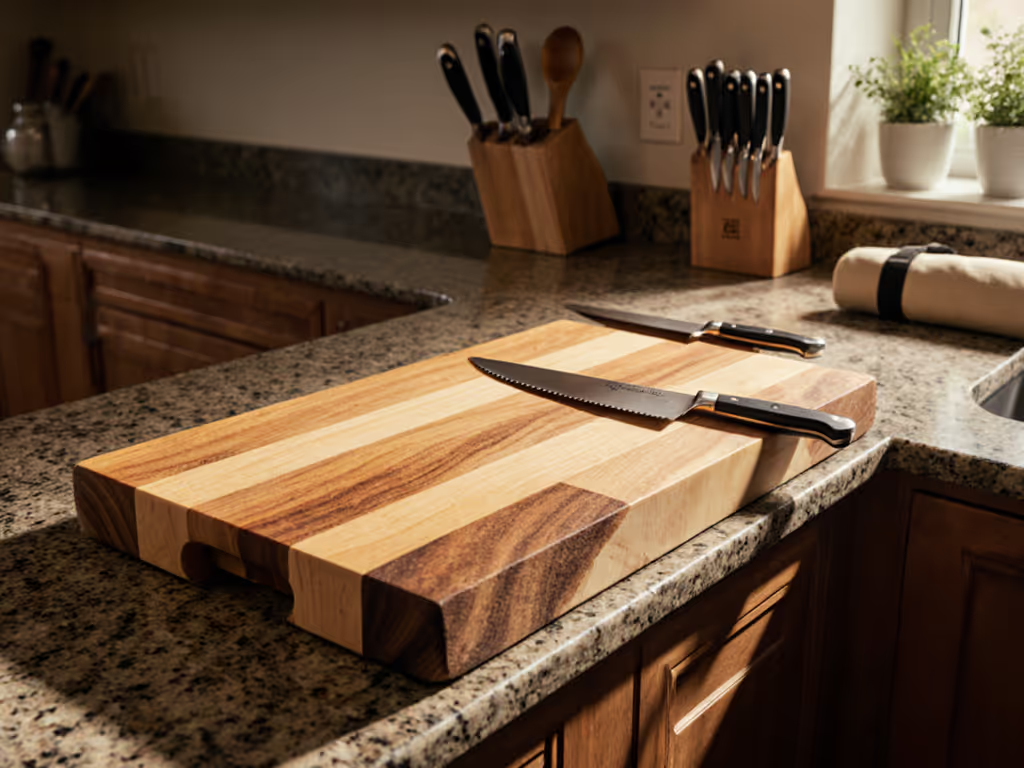
High-quality wood cutting boards are widely recommended for general cooking because they're gentle on edges, durable when maintained, and pleasant to work on.[6][9] A well-chosen wooden board can also be an excellent wood rolling surface for pastry.
Wood rolling surface benefits
According to independent tests and chef forums, wood is consistently among the most knife-friendly board materials.[6][9]
Benefits for pastry and baking:
- Edge-friendly give. Wood has micro-level "give" that cushions the blow of knives and dough wheels, reducing dulling and chipping.[6][9]
- Comfortable, quiet feedback. The feel is softer and less noisy than stone or glass, which matters over long baking sessions.[6]
- Good flour retention. Unlike very slick synthetics, a wood rolling surface holds a thin dusting of flour instead of shedding it immediately, helping manage stick.
- Versatility. One large wooden board can be your pastry station and your main food prep board.
This is where TCO starts tipping in wood's favor: a single, well-chosen board can cover lamination, veg prep, and bread slicing for years.[6][9]
Hygiene, myths, and reality
Serious cutting-board guides and some food safety research note that properly maintained wood can be at least as hygienic as plastic for domestic use, in part because bacteria do not thrive deep in dry wood and tend to die off over time.[6] For the research details on how bacteria behave on different board materials, explore our wood vs plastic bacterial growth review. Effective hygiene, however, depends on:
- Prompt cleaning with hot soapy water after use.
- Thorough drying in an upright position to avoid trapped moisture.
- Periodic oiling with food-safe mineral oil or board cream to prevent cracking and warping.[6]
What wood is not:
- It is not dishwasher-safe; high heat and moisture will warp, crack, or split it.[6]
- It is not ideal for soaking; prolonged submersion is another fast track to warping.
These are manageable constraints, but they are constraints, especially if you're doing high-volume sticky doughs.
Failure points and how to avoid them
This is where my own testing scars show. I've seen multi-piece "systems" with trays and add-ons warp within weeks - standing water trapped under a drip tray is a perfect recipe for bowed boards and bacterial funk.
Wood's common failure modes:
- Warping from being left flat in a puddle on one side.
- Cracking from drying out or sudden temperature swings.
- Deep gouges from heavy cleaver work (less of an issue for pastry-only use).
You mitigate most of this by:
- Choosing a thick, well-constructed board (edge-grain or end-grain from a reputable maker).[6][9]
- Storing it upright or in a rack with airflow.
- Keeping your use case realistic: pastry, knife prep, maybe light meat work, not repeated bone hacking.
TCO analysis for wood
From a TCO lens, a good wooden board is often the best value per use:[6][9]
- A quality board costs more up front than a thin plastic mat or a budget marble piece.
- But it covers multiple roles: pastry surface, daily cutting board, serving board if you choose.
- With basic care, it can last many years, spreading the cost over thousands of uses.
- It reduces sharpening frequency and knife replacement risk, which is non-trivial if you own expensive blades.[6][9]
Compared to marble, you lose a bit of maximum coolness and sugar-handling performance. You gain knife safety, versatility, and much easier handling.
Wood as your main pastry recommendation
If I had to pick one surface for most serious home bakers who also cook nightly, wood wins. The wood rolling surface benefits align with both pastry and general prep, and the board pulls its weight day after day.
The key is picking size and thickness that match your counter and sink, not the prettiest set with an ornate crumb tray that's begging to warp. Spend once on utility; skip the shiny, single-purpose clutter.
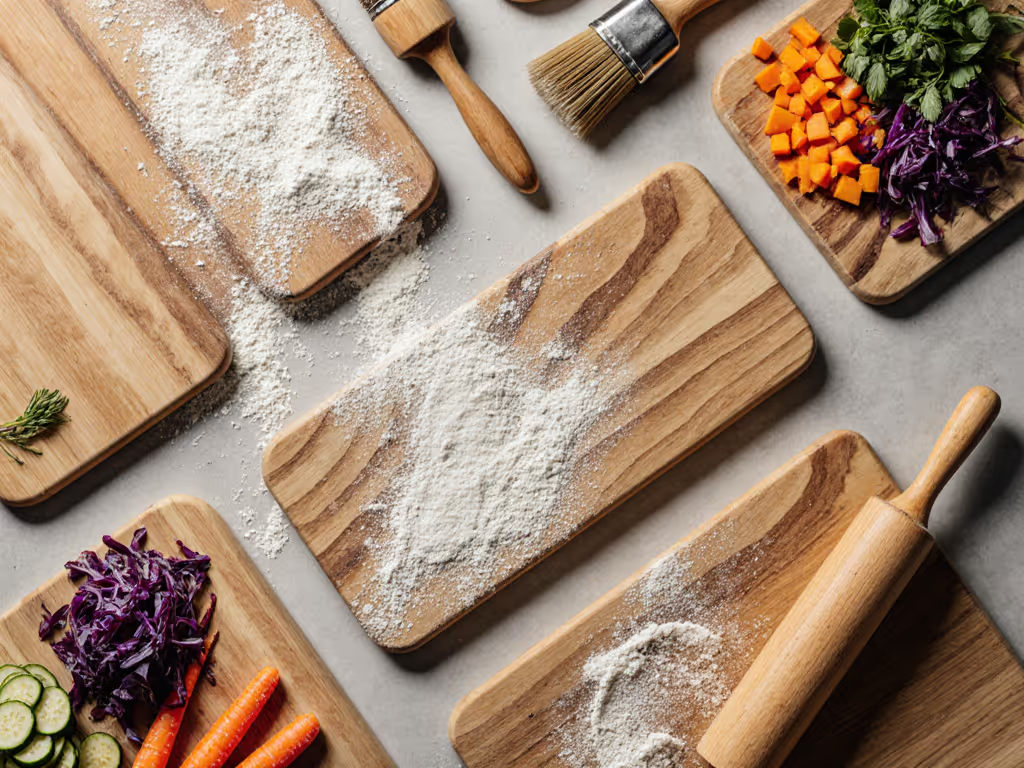
Silicone Dough Mats and Boards
Silicone is the modern answer to bulk: roll it up, tuck it in a drawer, and call it your pastry station. As silicone dough mat alternatives to heavy boards, they're compelling, but not magic.
Where silicone shines
Pros:
- Ultra-light and compact. A rolled silicone mat takes almost no storage space - a major win in small kitchens.
- Non-stick by design. With a bit of flour, most doughs release easily.
- Dishwasher-safe (check the manufacturer's upper temperature rating) and easy to hand-wash.
- Often printed with measurements and guides, which can speed up consistent rolling. If you prefer a solid board with built-in guides and non-slip features, check out our feature-rich wood board sets.
Silicone mats are particularly useful as liners on top of another surface: wood, laminate, or stone. They protect the base surface from sticky doughs and sugary spills.
Weak points for knives and stability
Silicone is not a perfect food cutting board substitute.
- Knife-friendliness is mixed. The material itself is softer than wood or plastic, but mats are usually thin and sit directly on a harder surface. If you cut aggressively, the knife can "bottom out" into the countertop.
- They can be prone to sliding if the underside or counter is damp or oily, unless designed with a high-friction backing.
- The cutting feel can be spongy or inconsistent when placed over uneven surfaces.
For pastry work where knives are used lightly - scoring dough, portioning - this is manageable. For regular chopping and heavier cuts, it's suboptimal and potentially unsafe if the mat moves.
Durability, staining, and TCO
Silicone has its own failure modes:
- It can cut or tear if you use sharp wheels or knives aggressively.
- It tends to pick up stains and odors over time (turmeric, strong spices, onion), which some users report even after repeated washing.
- Over years, repeated high-heat oven use can gradually degrade the material.
From a TCO perspective:
- A silicone mat is cheap per use if you treat it as a consumable liner that lasts a few years.
- It is not a long-term, heirloom surface like a good wooden board.
- It works best as a complement: protecting a knife-safe board underneath and extending that board's life.
When a silicone mat belongs in your pastry kit
Silicone makes sense if:
- You bake frequently but have limited storage and no room for a dedicated board.
- You already own a good wood or plastic board and want to shield it from sticky doughs or sugar.
- You want an easy-to-store, easy-to-clean surface for occasional pastry work.
It's not a true replacement for a solid, stable pastry board, but as an overlay it's one of the highest-value pastry chef kitchen tools you can add.
Marble vs Wood vs Silicone: Head-to-Head
Here's how the three options compare as pastry-first, knife-aware surfaces.
| Material | Best Use Cases | Knife-Friendliness | Maintenance Load | Weight & Storage | Overall Value (TCO) |
|---|---|---|---|---|---|
| Marble | Laminated dough, sugar, chocolate work | Poor for regular cutting; risks dulling/chipping[6][9] | Sealing, careful cleaning; risk of chips/cracks | Heavy, bulky; often sink-unfriendly | High initial cost, narrow use; can increase knife costs |
| Wood | Daily prep, pastry rolling, bread, general use | Excellent when well-made; edge-friendly[6][9] | Oiling, hand-wash only; upright drying[6] | Moderate to heavy; needs rack or dedicated spot | Higher upfront, low per-use cost; multi-role workhorse |
| Silicone | Liner over another surface, small kitchens | Fair; depends on what's underneath | Easy wash, often dishwasher-safe | Extremely compact; drawer-friendly | Low cost, shorter lifespan; superb complement, weak as sole board |
From the perspective of baking board recommendations, the pattern is clear:
- Marble: specialist; think of it as a tool for sugar/chocolate and advanced laminated dough, not everyday cutting.
- Wood: generalist workhorse; the only one here that can realistically be your main board for both pastry and cooking.[6][9]
- Silicone: overlay/supporting role; ideal for protecting your main board and keeping cleanup easy.
Building a Minimal, High-Value Pastry Board Setup
Most of the pain points I see come from overbuying: big, heavy gear that doesn't fit the sink, bonus trays that warp, and single-purpose gadgets that hog space.
A tight, high-value setup for 90% of serious home bakers:
1. One primary wooden board
Use this as both food cutting board and pastry station:
- Size: big enough for a standard pie crust or laminated dough fold, but still manageable in your sink and on your counter.
- Construction: quality edge-grain or end-grain from a reputable maker, with non-slip help (rubber feet or a damp towel underneath).[6][9]
- Care: hand-wash, dry upright, oil regularly.
This board shoulders daily cutting, gives you wood rolling surface benefits, and remains your flat, reliable base.
2. One silicone mat as a sacrificial surface
Lay this on top of your wooden board or countertop when:
- Working extra-sticky doughs.
- Dealing with sugary mixtures that might caramelize onto the surface.
- You want printed guides for roll-out sizes.
This keeps your main board cleaner, reduces scrubbing, and gives you a cheap, replaceable layer to abuse.
3. Optional: a smaller, lighter marble slab
If you're deep into laminated doughs or chocolate work and have the space, consider a modest-size marble slab, not a monumental one.
- Use it strictly as a pastry cooling surface, not as a cutting board.
- Store it where you can safely lift and wash it without acrobatics.
Treat marble as an accessory, not the foundation. The board that lives on your counter most days should still be wood if you care about your knives and your back.[6][9]
Final Verdict: Best Board Choices for Serious Home Pastry
If you're trying to choose between marble, wood, and silicone food cutting boards for pastry, here's the blunt, TCO-driven ranking:
- Start with wood as your main surface.
- It's the only option that balances edge-friendliness, comfort, durability, and versatility for both pastry and everyday prep.[6][9]
- It spreads its cost over thousands of uses and actively protects your knife investment.
- Add a silicone mat as your first upgrade.
- It's cheap, compact, and dramatically improves cleanup when used as a liner.
- Think of it as a consumable shield for your primary board.
- Reserve marble for specialized pastry work, if at all.
- Treat it strictly as a cooling and lamination tool, not a general cutting surface.
- Factor in its impact on knife wear, its weight, and its breakage risk before buying.
If you're building a kit for yourself or as a gift, the most honest baking board recommendations I can offer are simple: anchor the kitchen with one well-made wooden board, back it up with a silicone mat, and only then ask whether a marble slab solves a real problem you have, not just a vibe you've seen online.
Viewed through a TCO lens, the gear that wins is the gear that does more, for longer, with less drama. Spend once on utility; skip the shiny, single-purpose clutter.
Related Articles